Swanson

French dermocosmetics brand combining dermatological expertise with scientific innovation — part of our first edition.
Discover the brand →Products
Related searches
Related ingredients
Approved claims
L-arginine is a proteinogenic amino acid found naturally in protein-rich foods and in the body as part of amino-acid metabolism. In supplements it is commonly used as L-arginine in powders or capsules, and also as different salts/complexes chosen for handling and solubility, such as L-arginine hydrochloride (HCl) or arginine alpha-ketoglutarate (AAKG). On labels it may also appear as “free form” (base) or as part of amino-acid blends and pre-workout style formulas. As a raw material, L-arginine is a white crystalline powder, often hygroscopic, that is mixed into drinks or filled into capsules. In cosmetics it is seen less often in water-based formulas as an amino acid/conditioning component, typically at low concentrations and alongside other amino acids.
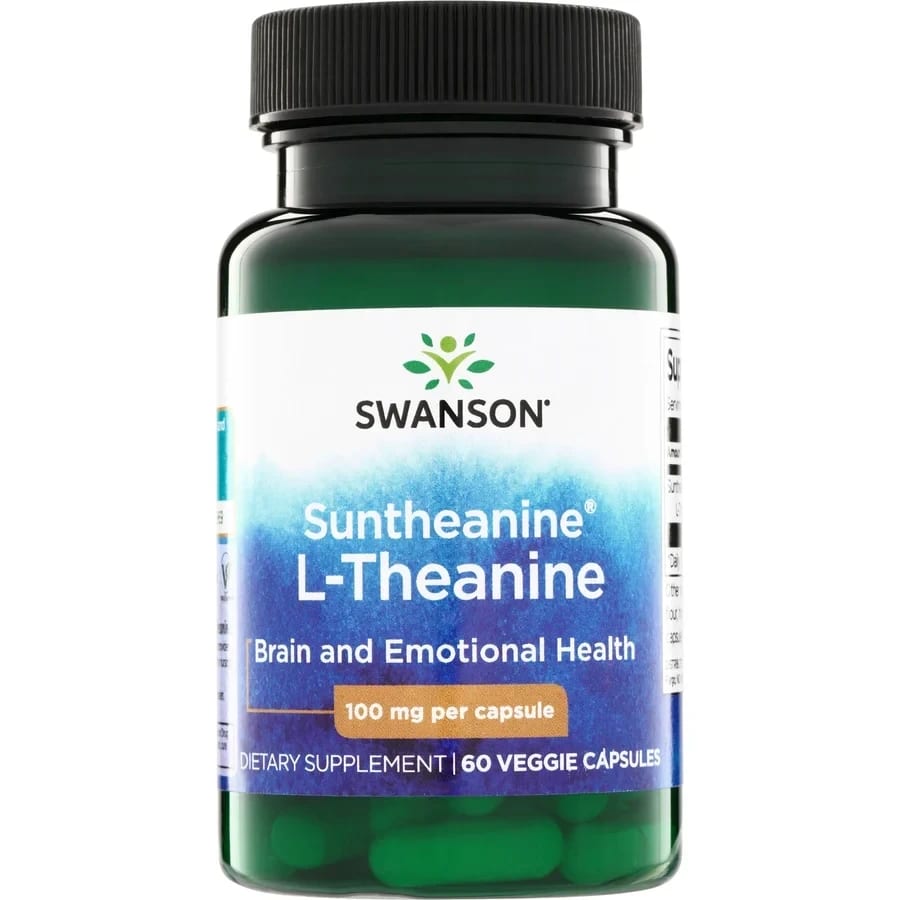
L-theanine is a non‑proteinogenic amino acid, chemically described as N(5)-ethyl‑L‑glutamine, occurring naturally mainly in tea leaves (Camellia sinensis) and in some mushrooms. In supplements it is typically used as purified L‑theanine in powder or capsule form, obtained either from tea extraction or via fermentation/biotechnological production. On labels it may also appear simply as “theanine”, with the L‑form being the most commonly used in finished products. As a water‑soluble ingredient, it blends well into drink mixes, stick packs and soluble powders. In cosmetics it is less common but may be included as a conditioning component in water‑based formulas, generally at low concentrations and alongside humectants and other amino acids.
N-acetylcysteine (NAC) is a derivative of the amino acid L-cysteine in which the amino group is acetylated; on labels it may also appear as N-acetyl-L-cysteine or acetylcysteine. It is a small, water-soluble organosulfur compound that is chemically related to cysteine found naturally in proteins and in human metabolism. In food supplements it is typically supplied as a powder or in capsules/tablets containing NAC as the primary ingredient, sometimes in blends with other amino acids. In cosmetics it may be present under the INCI name “Acetyl Cysteine”, used in water-based formulas such as serums or skin-care products. As a raw material, NAC is commonly identified by its chemical name “acetylcysteine” and standard identifiers such as a CAS number, while specifications can differ by purity grade and supplied form.
Approved claims
L-carnitine is a quaternary amino-acid derivative, chemically described as β-hydroxy-γ-trimethylaminobutyric acid, naturally present in the human body and in foods, especially those of animal origin. In supplements it is commonly used as free-form L-carnitine or as salts/esters that supply L-carnitine, such as L-carnitine L-tartrate, acetyl-L-carnitine, and propionyl-L-carnitine. These forms appear in capsules, tablets, powders, or liquids, with serving amounts varying widely depending on the formula. In cosmetics it may be included as a functional ingredient in leave-on or rinse-off products, typically at low concentrations and declared on the INCI list. On labels it can also appear as “carnitine” or under the specific form name, clearly indicating the source of the active substance. As a raw material it is typically offered with standardized purity and is often used in blended formulas alongside other amino acids, vitamins, or other supplement ingredients.
Hyaluronic acid is a high–molecular weight polysaccharide (a glycosaminoglycan) that occurs naturally in connective tissues and body fluids. In cosmetic products it is very often present as the more water‑soluble salt Sodium Hyaluronate, and also as modified forms such as Hydrolyzed Hyaluronic Acid or Sodium Acetylated Hyaluronate, selected for molecular weight and skin feel. The raw material is commonly obtained via biotechnological fermentation and supplied as a powder or as an aqueous solution for easy incorporation into formulas. In skincare it is used in serums, creams, masks and eye products, where it contributes to texture and a smooth application sensorial. In food supplements it may appear as hyaluronan or sodium hyaluronate, typically in capsules or tablets, frequently alongside other structural ingredients. Modern formulations often combine multiple molecular weights or crosslinked derivatives (crosspolymers) to fine‑tune viscosity and product stability.
Glucosamine is an amino sugar (aminomonosaccharide) that occurs naturally in the body as a building block within certain connective-tissue structures. In food supplements it is most commonly used as glucosamine sulfate or glucosamine hydrochloride, often stabilised as a salt with sodium chloride or potassium chloride, and presented as tablets, capsules, powders, or sachets. The raw material may be sourced from marine materials (e.g., crustacean shells) or produced via microbial fermentation, depending on the manufacturer and purity specifications. On labels it may also appear as “glucosamine sulfate sodium chloride” or “glucosamine sulfate potassium chloride”, which describe stabilised sulfate forms. In cosmetics, glucosamine-related derivatives may be used as functional ingredients in water-based formulas, while supplements typically focus on oral dose forms. Products frequently combine it with other ingredients from the same category, such as chondroitin, and declare the amount either as the salt form or as a glucosamine equivalent.
Fat-soluble vitamin; essential for vision, immunity, and skin.
Approved claims
Approved claims