Swanson

French dermocosmetics brand combining dermatological expertise with scientific innovation — part of our first edition.
Discover the brand →Products
Related searches
Related ingredients
Macronutrient essential for building and maintaining muscle and bone mass.
Approved claims
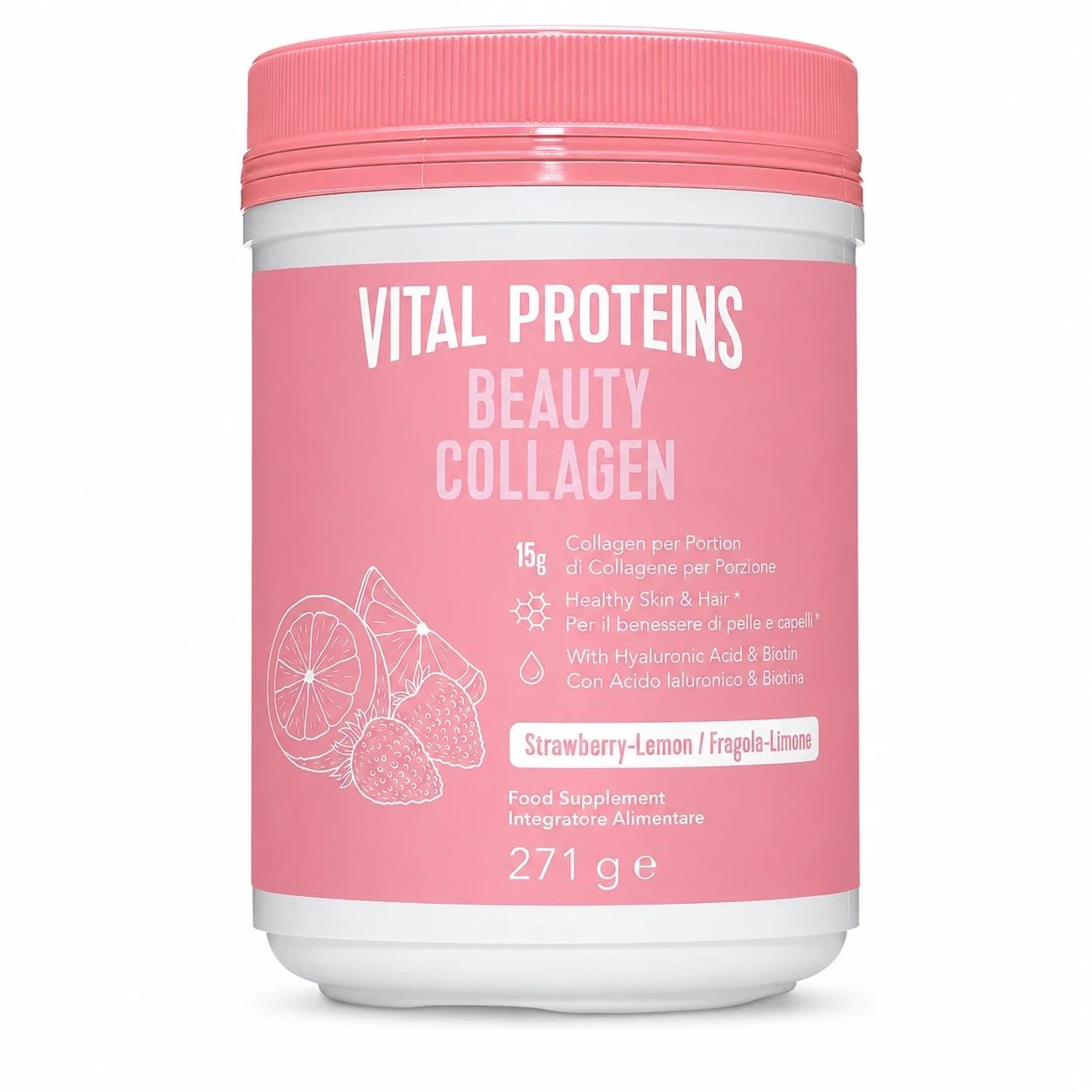
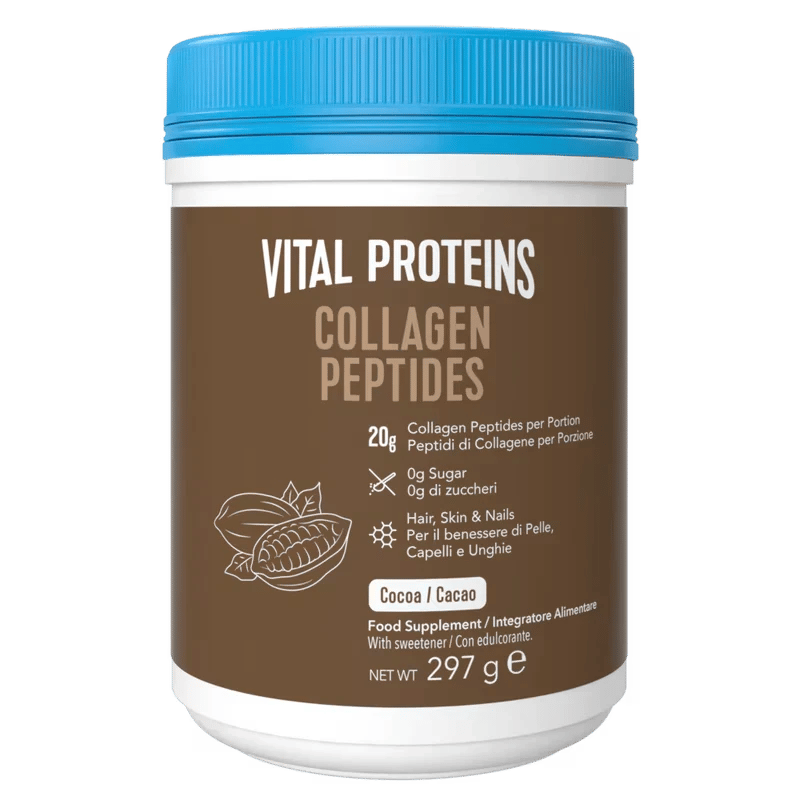
Collagen is a family of fibrous proteins naturally present in animal connective tissues and, in consumer products, it is most commonly sourced from bovine, porcine, or marine raw materials. In supplements it is frequently used as hydrolysed collagen, also labelled as “collagen peptides”, where the protein is broken down into smaller peptides to improve solubility and ease of use in powders, capsules, tablets, and ready-to-mix drinks. On labels it may appear as “hydrolyzed collagen” or “collagen peptides”, with the origin sometimes specified as marine, bovine, or porcine. In cosmetics, collagen is typically declared under the INCI name “Hydrolyzed Collagen” and is used in water-based formulas such as serums, creams, and masks, often at modest concentrations alongside humectants and film-forming polymers. As a material, it is a mixture primarily composed of amino acids, peptides, and proteins, with properties influenced by the source and degree of hydrolysis. Because it is protein-based, collagen-containing products can have a characteristic taste or odour, so flavoured options are also common.
Naturally occurring compound that supports physical performance during high-intensity exercise.
L-arginine is a proteinogenic amino acid found naturally in protein-rich foods and in the body as part of amino-acid metabolism. In supplements it is commonly used as L-arginine in powders or capsules, and also as different salts/complexes chosen for handling and solubility, such as L-arginine hydrochloride (HCl) or arginine alpha-ketoglutarate (AAKG). On labels it may also appear as “free form” (base) or as part of amino-acid blends and pre-workout style formulas. As a raw material, L-arginine is a white crystalline powder, often hygroscopic, that is mixed into drinks or filled into capsules. In cosmetics it is seen less often in water-based formulas as an amino acid/conditioning component, typically at low concentrations and alongside other amino acids.
Inositol is a six‑carbon polyol (sugar alcohol), chemically a cyclohexanehexol, occurring naturally in the human body and widely in plant foods. It exists as several stereoisomers, with myo‑inositol being the most prevalent form, while D‑chiro‑inositol is less abundant and is used either alone or in defined combinations in supplements. In foods and food supplements, inositol is typically supplied as a soluble powder or as capsules/tablets, most often as myo‑inositol, D‑chiro‑inositol, or as phosphorylated derivatives such as inositol hexaphosphate (IP6/phytate). In cosmetics it appears under the INCI name “INOSITOL” and is used in face, body, and hair formulas, usually at low levels within the water phase. Owing to its strongly hydrophilic character, it is easy to incorporate into serums, creams, toners, and leave‑in hair products. In formulations it may also be present as part of complexes alongside other humectant or conditioning ingredients.
Trace mineral that helps macronutrient metabolism and blood glucose levels.
Approved claims
Lycopene is a lipophilic carotenoid (a naturally occurring red pigment) found in tomatoes and other red fruits and vegetables. Chemically it is a C40H56 tetraterpene hydrocarbon with many double bonds, occurring as all‑trans and cis isomers. In supplements it is used as isolated lycopene or as a standardised tomato oleoresin/tomato extract, commonly formulated in oil-based softgels to keep it solubilised. On labels it may also appear as “E160d” when used as a food colour. In cosmetics it is used in lipophilic systems such as serums and creams, typically dispersed in the oil phase or encapsulated to improve stability and handling. Industrial sources include tomato-derived extracts and, in some products, lycopene produced from microbial sources or supplied in stabilised forms such as beadlets.
L-theanine is a non‑proteinogenic amino acid, chemically described as N(5)-ethyl‑L‑glutamine, occurring naturally mainly in tea leaves (Camellia sinensis) and in some mushrooms. In supplements it is typically used as purified L‑theanine in powder or capsule form, obtained either from tea extraction or via fermentation/biotechnological production. On labels it may also appear simply as “theanine”, with the L‑form being the most commonly used in finished products. As a water‑soluble ingredient, it blends well into drink mixes, stick packs and soluble powders. In cosmetics it is less common but may be included as a conditioning component in water‑based formulas, generally at low concentrations and alongside humectants and other amino acids.
Hyaluronic acid is a high–molecular weight polysaccharide (a glycosaminoglycan) that occurs naturally in connective tissues and body fluids. In cosmetic products it is very often present as the more water‑soluble salt Sodium Hyaluronate, and also as modified forms such as Hydrolyzed Hyaluronic Acid or Sodium Acetylated Hyaluronate, selected for molecular weight and skin feel. The raw material is commonly obtained via biotechnological fermentation and supplied as a powder or as an aqueous solution for easy incorporation into formulas. In skincare it is used in serums, creams, masks and eye products, where it contributes to texture and a smooth application sensorial. In food supplements it may appear as hyaluronan or sodium hyaluronate, typically in capsules or tablets, frequently alongside other structural ingredients. Modern formulations often combine multiple molecular weights or crosslinked derivatives (crosspolymers) to fine‑tune viscosity and product stability.
B vitamin that supports coenzyme A synthesis and mental performance.
Approved claims