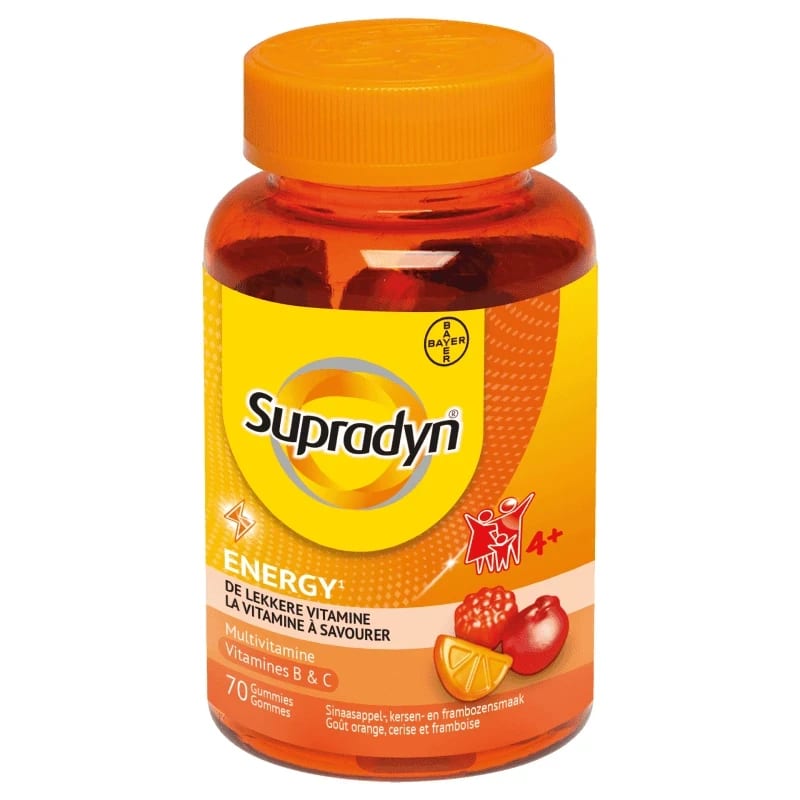
Supradyn

French dermocosmetics brand combining dermatological expertise with scientific innovation — part of our first edition.
Discover the brand →Products
Related searches
Related ingredients
Approved claims
Naturally occurring compound that supports physical performance during high-intensity exercise.
Red clover (Trifolium pratense L.) is a herbaceous plant from the legume family (Fabaceae), recognised by its pink flower heads. In supplements it is most often used as a botanical extract from the flowering tops or flowers, frequently standardised to its isoflavone content (e.g., biochanin A, formononetin, daidzein, genistein). Such extracts appear in capsules, tablets, powders or liquid drops, and may be listed on labels as “Trifolium pratense extract” or as flower/leaf-derived extracts. In cosmetics it is used as a flower or leaf extract declared under its INCI name, and may be supplied in aqueous, glycerinic or hydroalcoholic bases. In topical formulas it is found in serums, creams and scalp or skin products, often as part of multi-botanical blends. The exact composition depends on the plant part, extraction method and the degree of standardisation.
Tribulus terrestris is a herbaceous plant from the Zygophyllaceae family, widely known in botanical literature as “puncture vine”, with product uses typically involving the fruit, aerial parts, and root. In food supplements it is most often found as a plant powder or as a dry extract, frequently standardised for steroidal saponins (e.g., furostanol glycosides) and sometimes declared with a percentage of protodioscin, depending on plant part and origin. The chemical profile of extracts can vary markedly with chemotype, extraction method, and standardisation approach, so labels may also specify an extract ratio (e.g., DER) or percentages of defined fractions. In cosmetics it may appear as a botanical extract for topical use, listed under an INCI name that specifies the plant part (for example, a root extract or a fruit/stem extract). In formulations it is commonly combined with other botanicals and carriers such as maltodextrin, while in topical products it may be included in serums, creams, or toners featuring plant extracts.
Cranberry is the fruit of Vaccinium macrocarpon (Ericaceae), a tart red berry used as a food and as a raw material for supplements. In products it appears as dried fruit powder, juice concentrate, or fruit extract, often standardised for polyphenols, especially proanthocyanidins (PACs), with A‑type PACs frequently highlighted. Its natural composition also includes anthocyanins, flavonols and organic acids, while the levels of these constituents vary with cultivar and processing. Cranberry is most commonly presented in capsules, tablets, drink powders and liquid formats; in cosmetics it may be used as a fruit extract or as a plant-derived aromatic component in formulations.
Trace mineral that helps macronutrient metabolism and blood glucose levels.
Approved claims
Approved claims
Approved claims
Astaxanthin is a xanthophyll carotenoid, a fat-soluble red‑orange pigment that occurs naturally in certain microalgae and then enters the marine food chain. In supplements it is most commonly used as natural astaxanthin sourced from the microalga Haematococcus pluvialis, typically supplied as an oleoresin extract rich in astaxanthin, where a portion is present as fatty‑acid esters. Because it is oil‑soluble, it is frequently formulated in softgels with carrier oils (such as olive or sunflower/safflower oil) or as a standardised powder for capsules and tablets. On labels it may appear as “astaxanthin (from Haematococcus pluvialis extract)” or as a standardised algae extract with a declared astaxanthin percentage. In cosmetics it can be found in lipophilic formulas such as serums or creams, often encapsulated or dissolved into the oil phase to improve stability. As a carotenoid pigment it is sensitive to light and oxidation, so formulations commonly include technological antioxidants for protection.
Lycopene is a lipophilic carotenoid (a naturally occurring red pigment) found in tomatoes and other red fruits and vegetables. Chemically it is a C40H56 tetraterpene hydrocarbon with many double bonds, occurring as all‑trans and cis isomers. In supplements it is used as isolated lycopene or as a standardised tomato oleoresin/tomato extract, commonly formulated in oil-based softgels to keep it solubilised. On labels it may also appear as “E160d” when used as a food colour. In cosmetics it is used in lipophilic systems such as serums and creams, typically dispersed in the oil phase or encapsulated to improve stability and handling. Industrial sources include tomato-derived extracts and, in some products, lycopene produced from microbial sources or supplied in stabilised forms such as beadlets.