 New
Swanson

French dermocosmetics brand combining dermatological expertise with scientific innovation — part of our first edition.
Discover the brand →Berberin+
Delivery & returns
Usage Take 1 or 2 tablets per day, with water, during a meal.
Good to know Do not exceed the recommended daily dose. Keep out of the reach of young children. A food supplement is not a substitute for a varied diet.
Answers based on this product's own information.
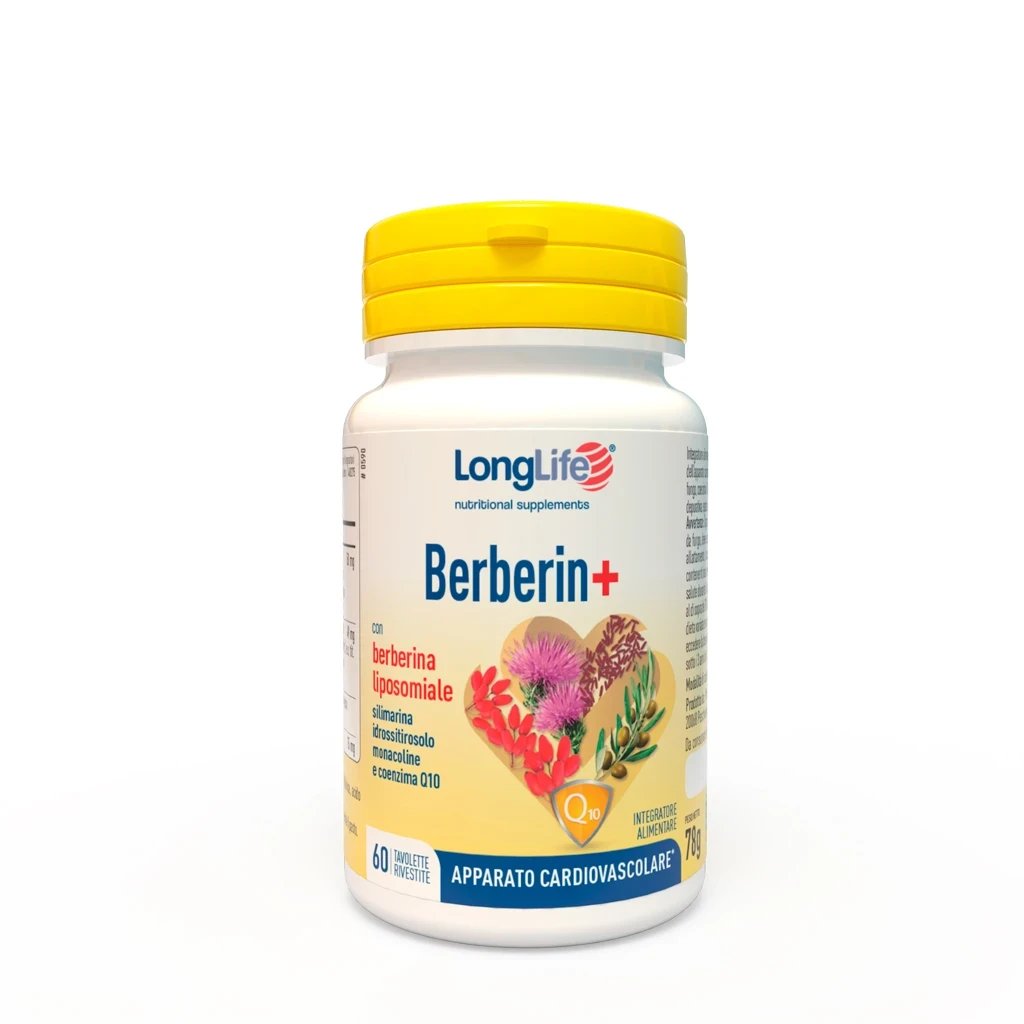
Description + Function LongLife Berberin+ is a dietary supplement with liposomal berberine, combined with silymarin from milk thistle, hydroxytyrosol from olive, monacolin from fermented red rice, and coenzyme Q10. The formula is primarily designed to support metabolism and cardiovascular well-being, with ingredients also related to liver function and antioxidant protection. Berberine is used here in liposomal form, which LongLife states is more bioavailable than conventional extract. Silymarin complements the formula for supporting liver function and carbohydrate metabolism, while hydroxytyrosol offers antioxidant action. The formula also contains monacolin from fermented red rice and coenzyme Q10. Main function for Apoteca: Support for metabolism, cardiovascular well-being, and liver function
Berberine is a yellow isoquinoline alkaloid that occurs naturally in several plants, including species of the genus Berberis and other botanicals. In food supplements it is most commonly used as an isolated substance or as a salt, most often berberine HCl, typically standardised to a high berberine content. It may also appear as part of botanical extracts where the label declares the berberine amount or a standardisation percentage. Typical product formats include capsules, tablets and powders, with the daily portion stated in milligrams. In cosmetics it can be present as a discrete ingredient or linked to a botanical source, and on INCI lists it may also be found as “Berberine Chloride”. Because it is a plant-derived isolated compound, labelling can vary between “berberine”, “berberine HCl”, and the names of root/bark extracts that supply it.
Discover
Related
Milk thistle is the plant Silybum marianum (L.) Gaertn., best known for its fruits/seeds, which are used to obtain botanical extracts containing a characteristic group of constituents referred to as silymarin (a complex of flavonolignans). In food supplements it is typically used as a seed/fruit extract, often standardised to a declared percentage of silymarin, and presented as capsules, tablets, powders or liquid drops. In cosmetics it may appear as a Silybum marianum extract in aqueous or glycerinic media, or as a lipid-linked derivative/ester designed for oil-based systems. On cosmetic ingredient lists it is usually named using INCI, such as Silybum Marianum Extract or Silybum Marianum Fruit Extract. Extract composition can vary with plant part, extraction method and degree of standardisation, so products carrying the same botanical name are not necessarily comparable. In finished products, milk thistle may be used alone or alongside other botanical extracts and common formulation antioxidants.
Coenzyme Q10 is a lipophilic benzoquinone (ubiquinone-10) that occurs naturally in human cells and in many foods in small amounts. In food supplements it is typically provided as ubiquinone (the oxidised form) or ubiquinol (the reduced form), commonly dispersed in oils or microencapsulated for softgels, capsules or powders. In cosmetics it is most often declared under the INCI name “Ubiquinone” and is used in emulsions such as face creams, eye-area products, serums and body lotions. As a fat-soluble molecule, it is usually formulated into the oil phase and paired with other formula antioxidants to support stability. On labels it may also appear as “ubidecarenone”, a naming variant used in some markets for the same substance. Cosmetic- and supplement-grade material may be produced by fermentation or synthesis and then standardised for purity.
Read the guide: Milk thistle: what it is and how to read it on the label
Përbërja Për 1 tabletë: Berberinë liposomale: 250 mg nga Berberis aristata prej së cilës berberinë HCl: 50 mg Ekstrakt fruti të gjembit të qumështit (Silybum marianum): 75 mg prej së cilës silimarinë: 60 mg Ekstrakt fruti ulliri (Olea europaea): 50 mg prej të cilit hidroksitirosol: 5 mg Oriz i kuq i fermentuar (Monascus purpureus): 49 mg prej të cilit monakolina: 1.47 mg Koenzimë Q10: 15 mg. Përbërës të tjerë përfshijnë fosfat kalciumi dibazik, celulozë mikrokristaline, stearat magnezi me origjinë bimore dhe agjentë veshës të tabletës. Karakteristika: 60 tableta • Pa gluten • I përshtatshëm për veganë.
Earn 207 points with this purchase