What milk thistle is
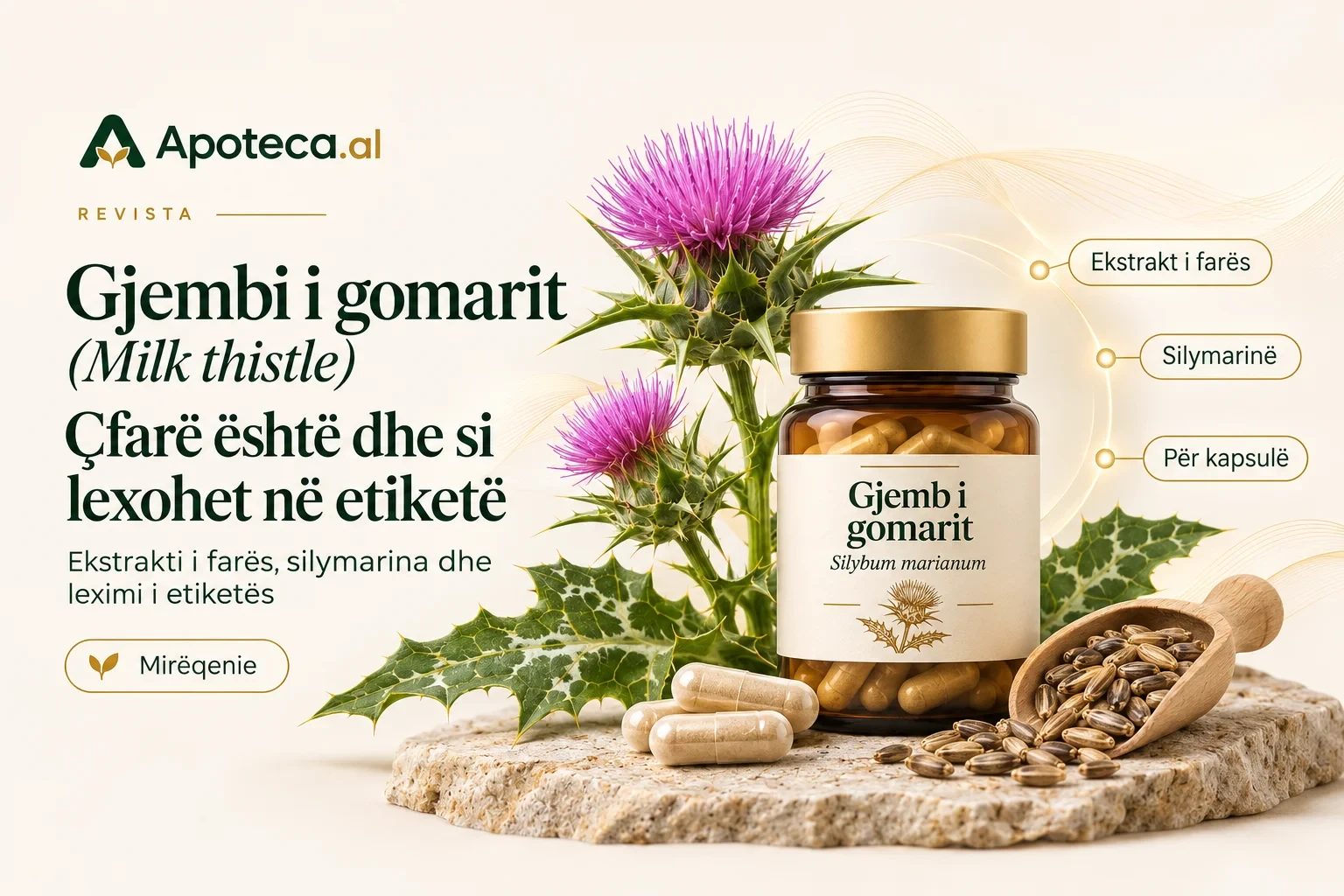
Milk thistle is the plant Silybum marianum (L.) Gaertn. In food supplements, the most common starting material is the fruit/seed, used to produce botanical extracts.
On labels, the term “silymarin” may appear. This is not the plant name; it refers to a characteristic complex of constituents (flavonolignans) often used as a reference point to describe the extract and, in some products, to indicate standardisation.
On a product page, milk thistle may appear as a single ingredient or within catalogue categories such as “Herbal extracts” and “Multivitamins”, where it is combined with other ingredients. That makes it useful to read beyond the headline and check the ingredient list and declared amounts.
The botanical name Silybum marianum is the most precise identifier: common names can vary, while the Latin name clearly points to the exact plant.
Even when two products share the same botanical name, they are not automatically comparable. The plant part, extraction method, and degree of standardisation can change what the extract contains and how it is presented on the label.
Formats in the catalogue and how they differ
In the catalogue, milk thistle appears as supplements in the “Capsules” format. Other formats exist on the broader market, but the practical focus here follows what is shown on the label and product page.
On labels, the main differences are usually not the capsule format itself, but the raw material and how it is positioned within the formula:
- “Fruit/seed extract” as the main or only ingredient.
- Part of a blend (for example, within a “Multivitamins” formula), where milk thistle is one component among many.
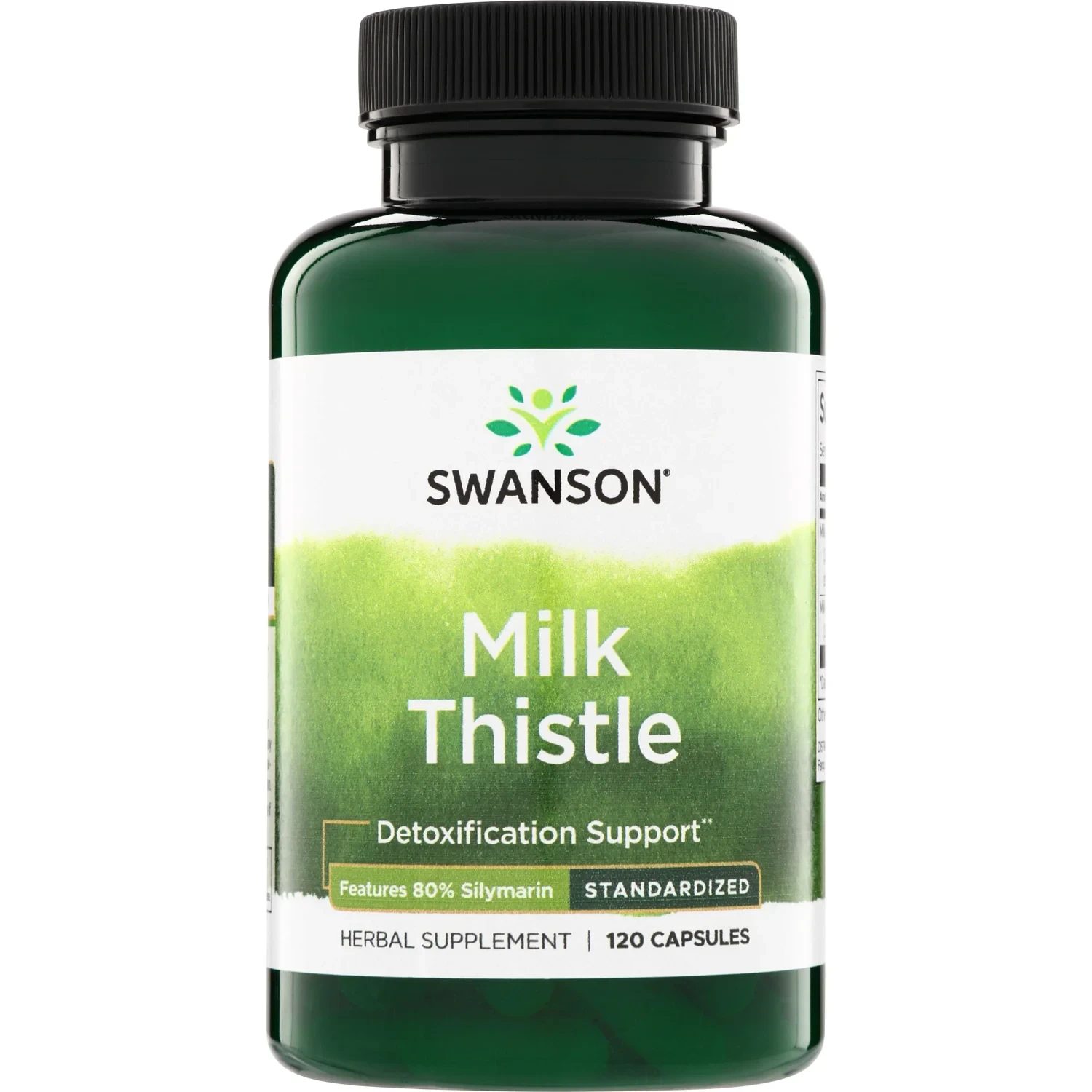
A key comparison point is whether the extract is “standardised”, and to what. This is often expressed as a % of silymarin. When two products look similar at first glance, standardisation is one of the clearest label cues that a measurable reference point is being declared.
In combined products, milk thistle may be paired with ingredients such as iron, biotin, zinc, pantothenic acid (vitamin B5), vitamin B6, or berberine. These combinations change the formula’s profile and, in practical terms, change how the label should be read (because all declared amounts matter, not only the botanical extract).
In cosmetics, it is read differently: it typically appears in the ingredient list under INCI, such as Silybum Marianum Extract or Silybum Marianum Fruit Extract. This is a different kind of “format” tied to the extract type and the formulation medium (aqueous/glycerinic, or designed for oil-based systems).
Where it occurs in everyday food
Milk thistle is not a routine everyday food ingredient in the sense of a standard dietary staple. In practice, it is mainly encountered as a plant and as an extract in supplements.
When people talk about “sources,” they typically mean botanical material (fruit/seed) used for preparations, not common packaged foods. For that reason, comparing “how much comes from food” is usually difficult.
This makes the supplement label the primary source of information for:
- The declared extract amount per serving/day
- Standardisation (if stated), for example a % of silymarin
If it appears inside a “Multivitamins” formula, the milk thistle component is still a botanical extract, while vitamins/minerals in the same product follow different units and declaration conventions.
For clarity, it helps not to confuse the plant name with food ingredients: look for Silybum marianum in the ingredient list.
What to check on the label
In practice, two label details make the biggest difference when comparing milk thistle products: correct identification and standardisation/amount.
Key points to check include:
- Accurate botanical naming: look for Silybum marianum and, when specified, whether it is a fruit/seed extract. This clarifies the plant part used.
- Standardisation: check whether it states “standardised to …% silymarin.” If one product declares standardisation and another does not, they are usually not comparable by name alone.
- Amounts and units: distinguish mg of extract from mg (or %) of silymarin. Two products with the same extract mg may declare different standardisation levels, or none at all.
- Ingredient list and role within the formula: if it is a combined product (for example with iron, biotin, zinc, pantothenic acid (vitamin B5), vitamin B6, berberine), review how amounts are declared and whether milk thistle is a main ingredient or a secondary component.
- Directions and warnings: look for notes about medicine interactions and the instruction to consult a doctor for personal questions. For help interpreting label terms and product-page wording, the Apoteca team can assist.
A simple way to choose between options in the catalogue is to prioritise products that clearly state (1) the plant part and (2) silymarin standardisation, then compare the amount per serving as defined by the label.
How it is typically used (label-led)
In supplements, milk thistle is typically used orally in the “Capsules” format. The method and frequency of use are defined by the product label and the directions on the product page.
If the label specifies a daily serving, that is the practical reference point. In general, label directions should not be exceeded.
For combined products (for example Multivitamins or formulas with iron/biotin/zinc/B vitamins), the label directions matter because the serving logic applies to the whole formula, not only the botanical extract.
The safety notes highlight that milk thistle may interact with certain medicines metabolised by liver enzymes and with some antidiabetic medicines; in these situations, consulting a doctor before use is essential.
For pregnant or breastfeeding women and children, use requires a doctor’s advice. For questions about composition, declarations, and how to interpret the label, the Apoteca team can help.
Tradition and research: questions worth asking
The EMA/HMPC monograph (EMA/HMPC/294187/2013) describes the European traditional use of Silybum marianum as “fructus” (fruit), describing a traditional-use product for relief of digestive complaints described as a sensation of fullness, bloating, and flatulence, and stating that this use is based exclusively on long-standing use.
According to NCCIH (public information page), clinical studies in people have used “milk thistle extracts” and the extract “silymarin,” with protocols varying across studies; NCCIH notes that the number of human studies is small and the evidence quality does not allow definite conclusions.
According to the EU Register dataset PDF (European Commission; generated 14/02/2013), a submitted claim for “Silymarin BIO-C®, an extract of milk thistle … seeds (dry extract standardised to 40–80% silymarin)” is listed with status “Non-authorised” (referencing Commission Regulation (EU) 666/2011), indicating that this claim is not authorised for use as a health claim in EU labelling/marketing.
According to Health Canada (safety assessment summary), the literature includes in vitro evidence of inhibition of some metabolising enzymes (e.g., CYP450 and UGT) by milk thistle seed extract/silymarin, but reviews cited report that inhibitory concentrations are extremely high and generally not achievable with oral intake; the cited reviews also report limited influence in clinical settings on pharmacokinetics of several medicines metabolised by these enzymes, highlighting limits in what is known with confidence about interactions.
According to NCCIH, concerns have been raised about the chemical and microbiological quality of milk thistle supplements on the market, including cases where silymarin amounts differ substantially from label statements or where contamination is reported; NCCIH presents this as a safety/labelling issue to keep in mind when comparing products.